Compression Comes Before Expansion on NQ
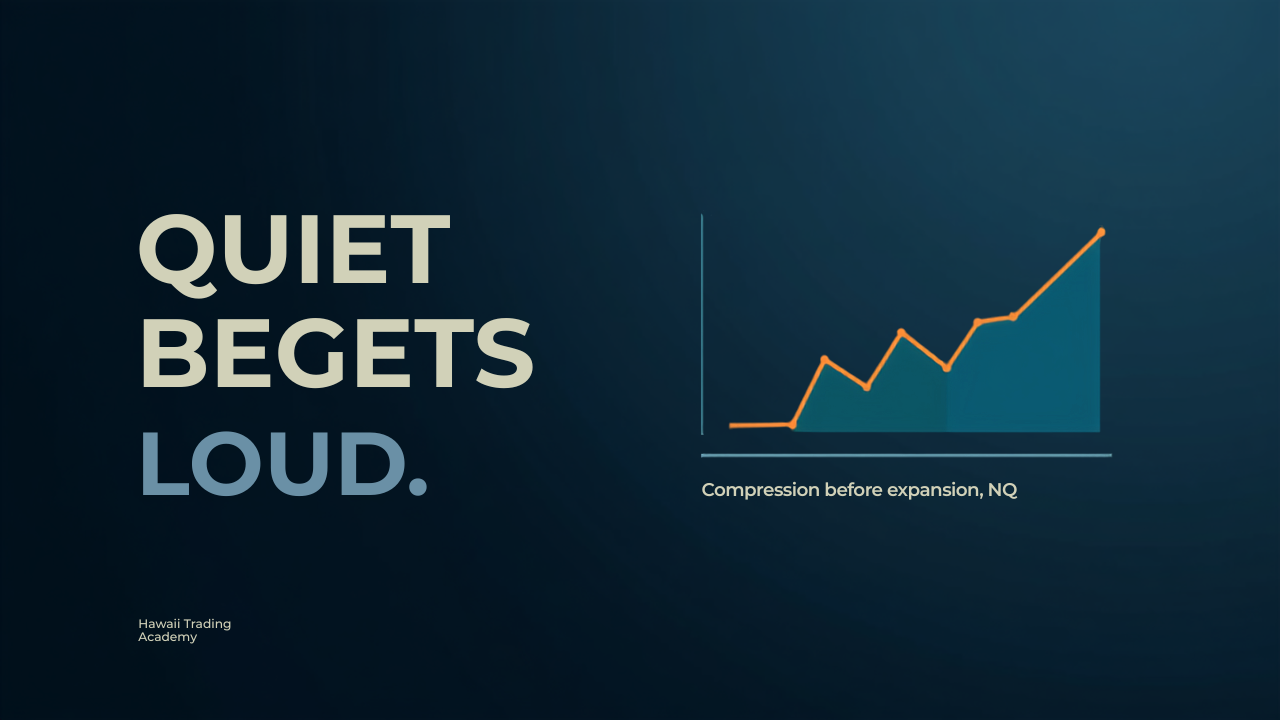
A dead, narrow day feels like nothing is happening. It is often the setup for the opposite. We tested it on NQ.
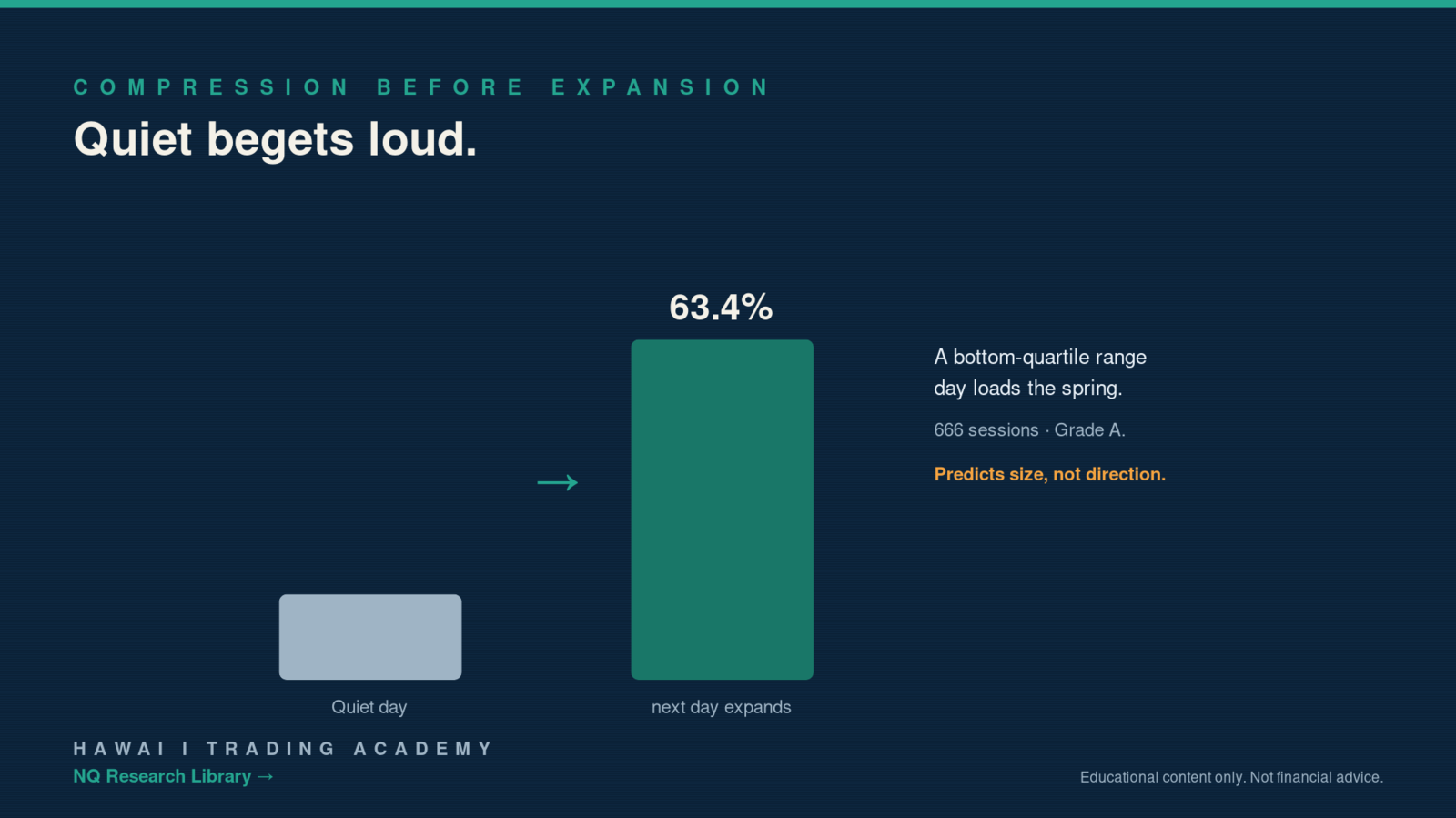
We took 666 bottom-quartile range days, the quietest sessions. The next regular session expanded 63.4% of the time. Significant in every session window we checked.
Why Quiet Loads the Spring
Volatility clusters and mean-reverts in size. A tight day is the market coiling. It rarely stays coiled. The energy that did not come out today tends to show up tomorrow.
This is one of the cleaner patterns in the whole library. It replicated across discovery, validation, and holdout. Grade A.
What It Actually Tells You
Here is the honest boundary. It predicts size, not direction. A quiet day says tomorrow is more likely to be a mover. It does not say up or down. That is a huge difference for how you plan.
What you do with it is prep. After a compressed day, widen your expectations. Do not get caught sizing for another dead session when the range is about to double.
The full com...
Downside Shocks Hit Harder and Linger Longer
Up moves and down moves are not mirror images. Anyone who traded a real selloff knows it in their gut. We put a number on it for NQ.
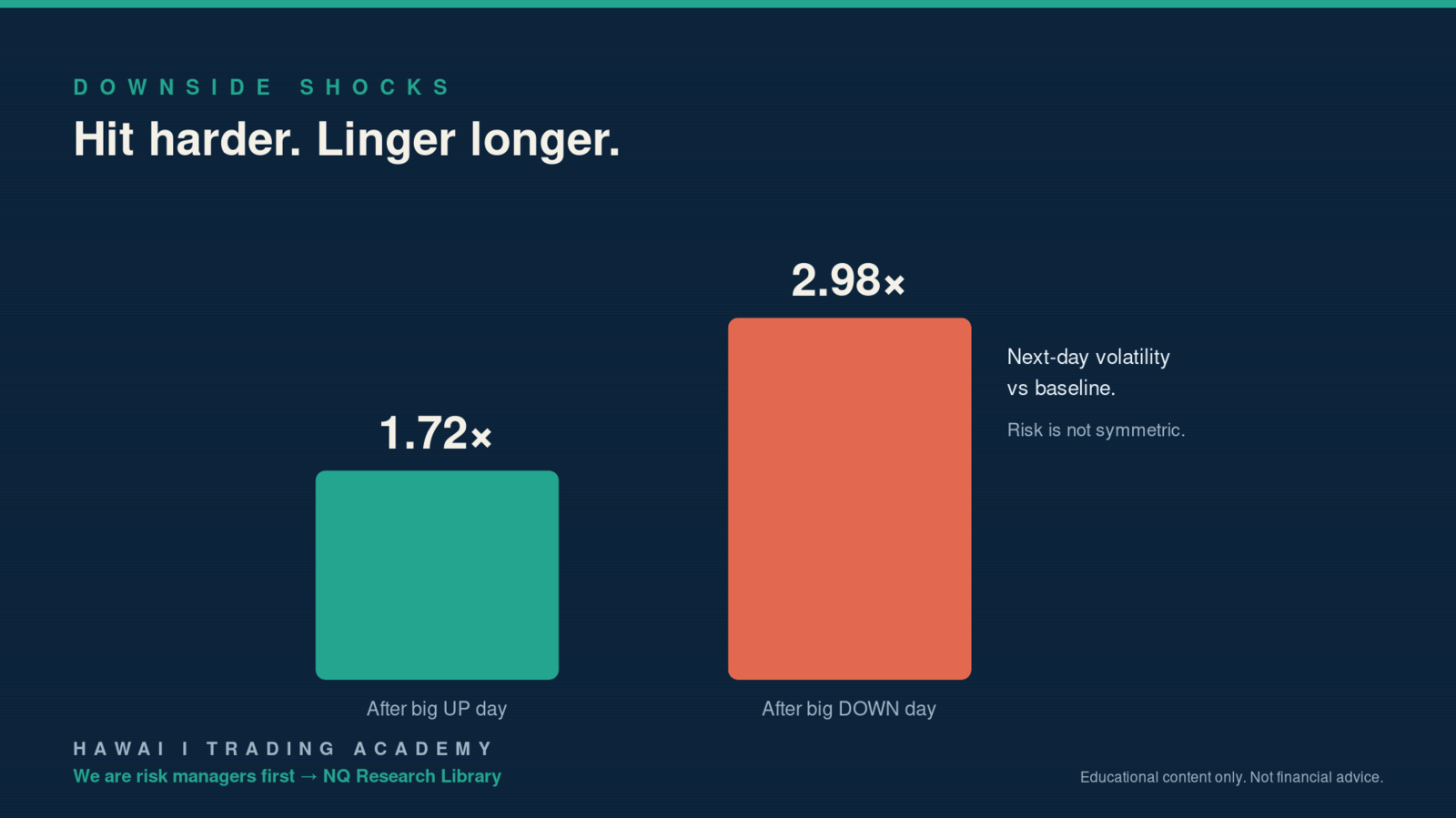
We compared the largest down days to the largest up days. After a big down day, next-day volatility ran a median 2.98 times baseline. After a comparably big up day, only 1.72 times.
Fear Moves Faster Than Greed
Selloffs feed on themselves. Margin calls, forced selling, stops cascading. The tape stays wild the day after, and often longer. Rallies tend to be calmer and slower.
233 large-down days and 198 large-up days went into this. It is not a fluke of one crash. It is the shape of the market.
Why This Is a Risk Rule, Not a Trade
This will not tell you to buy or sell. It tells you the environment. The day after a big drop is a high-volatility environment whether you are long, short, or flat. That is when position sizing saves accounts.
Size the same after a selloff as you do on a calm day and you are taking on far more real risk than your positio...
The 9:30 Open Is the Loudest Five Minutes of the Day
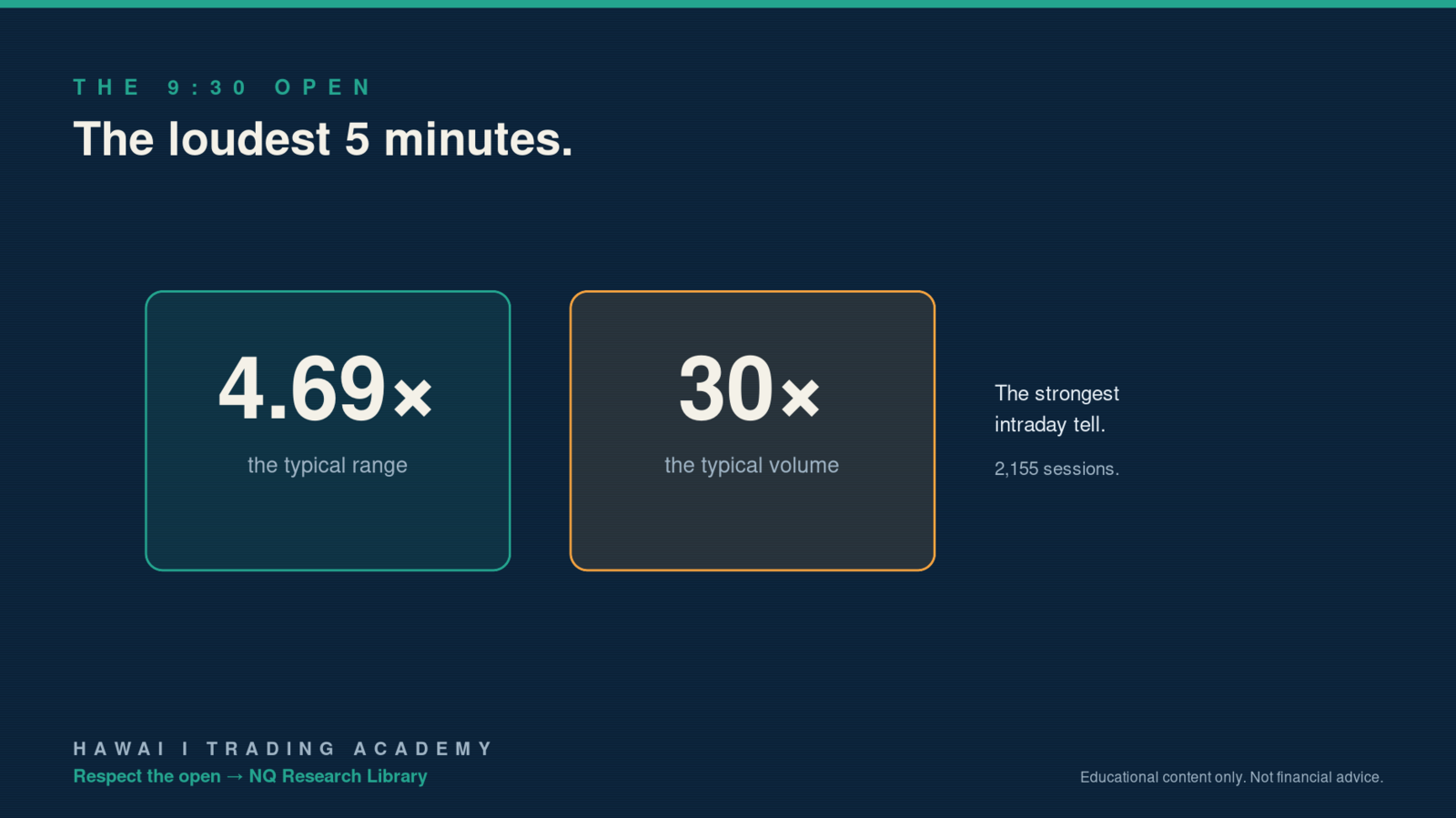
If you only knew one thing about intraday NQ, know this. The open is not like the rest of the day. We measured it across 2,155 sessions.
The 9:30 ET opening five-minute block ran at least 4.69 times the typical range and 30 times the typical volume. The pattern held across every test period.
The Strongest Intraday Tell
Nothing else on the clock comes close. The open is where the day's information gets priced, fast and loud. Volume floods in. Range explodes. Then it settles.
This is the single most reliable time-of-day fact in the NQ library. It is not subtle and it does not fade.
Respect It or Get Run Over
New traders love the open because it moves. That is exactly why it is dangerous. 30 times the volume means the fills are different, the spreads are different, and a normal-sized stop can get blown through in one candle.
The honest use is simple. If you trade the open, size for 5 times the range, not the calm midday range. If you cannot handle that, wait 15 minutes. The clock...
How We Try to Break an Edge Before We Trust It
Here is a stat that should be a trade. In NQ, the first-hour direction matched the closing direction 71.7% of the time, across 2,654 sessions. And a median 59.4% of the whole day's range already existed after that first hour.
Read that fast and you would bet the farm. Follow the first hour, hold to the close, print money.
Our audit ruled it out. On purpose.
Why We Try to Break Our Own Ideas
71.7% agreement sounds like a coin that lands your way three times out of four. But direction agreement is not a trade. When you add the real entry, a real stop, and the cost of getting in and out, the translation from pattern to P&L is where most edges die. This one got flagged failed on execution for exactly that reason.
That is the job of research done right. Not to find things that look good. To find the ones that survive being attacked.
The Whole Library Works This Way
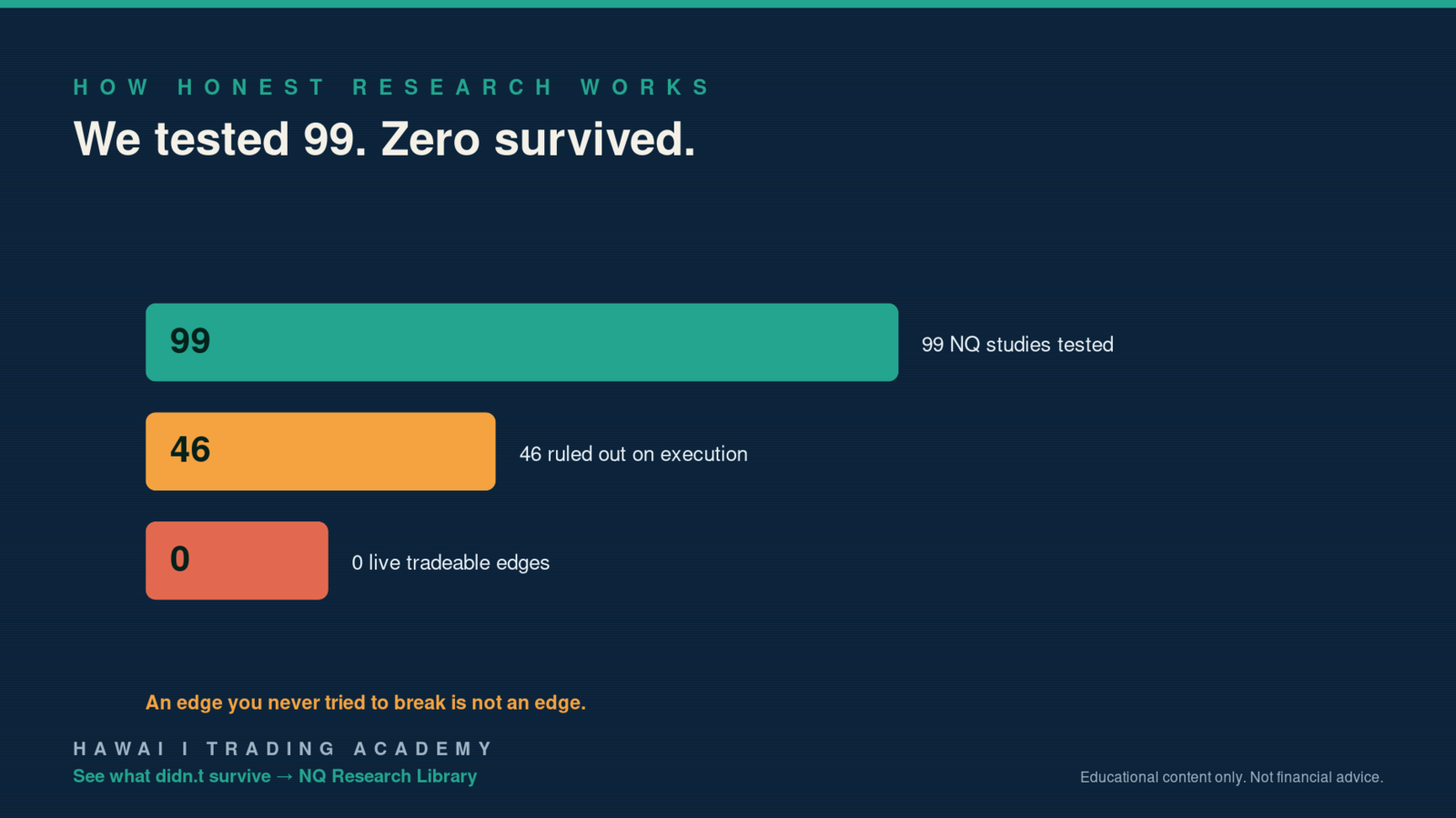
We ran 99 NQ studies. A September audit admitted zero of them as a live tradeable edge. 46 were closed as null or fail...
We Tested 99 NQ Edges. Zero Survived the Data.
We ran 99 separate studies on NQ futures. Big samples too. One pulled from 2.07 million overnight minutes. Another from 3,883 regular-hours sessions. Then we audited every one for a live, tradeable edge.
The number that survived? Zero. Not one.
Sounds like a bad week. It’s the opposite. This is what honest research looks like. It’s also why we don’t sound like every other trading channel. We’re coaches who trade, not salespeople who teach. The new NQ Research Library inside Net Alpha Pro is 99 receipts to prove it.
Why Publish Research That Found No Edge?
Most trading content shows you the winners and buries the graveyard. We built the library the other way. Every study lists its question, its sample size, its result, and its caveat. Then a September 1 audit sorted all 99 into plain buckets. 46 closed as null or ruled out on execution. 25 were useful only as risk-and-range context. The rest were descriptive structure or forward watchlist leads.
Read that again. Forty-six popular...